


An Insider's Guide to Visiting Dublin
Thinking of coming to DrupalCon Dublin this year? Why not extend your trip by a few days and stay a bit longer to take in some of the fabulous things you can go do and see in Dublin?
Here's our recommended list of things to do and see while here:
1. Guinness Storehouse
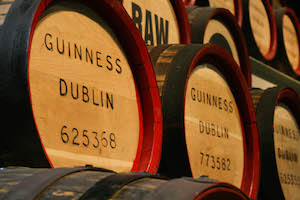
Recently awarded the best tourism attraction in Europe accolade, the Guinness Storehouse tops our list of places to visit in Dublin.
At the Guinness Storehouse you can explore each of the seven floors in this pint-glass shaped building to see how Guinness is made, before finishing the tour at the Gravity Bar where you can enjoy a complimentary pint of the black stuff while overlooking panoramic views of the city.
2. Kilmainham Gaol
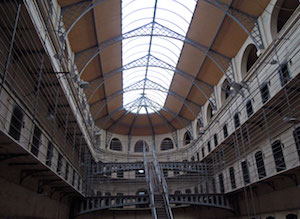
Interested in history? Then be sure to stop by Kilmainham Gaol during your stay here. Leaders of various nationalist rebellions since 1798 were imprisoned here, and in some cases, executed, such as the seven signatories of the 1916 Proclamation of the Irish Republic.
This year we're commemorating the 100 year anniversary since the 1916 Easter Rising and Kilmainham Gaol is holding a special “1916 Portraits and Lives” exhibition.
3. Trinity College Dublin & the Book of Kells
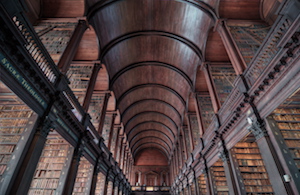
Trinity College Dublin, one of Ireland's most well known third-level education institutions, is located in the heart of Dublin city. Founded by Queen Elizabeth in 1592, it contains a lot of history and many beautiful buildings. This includes the fabulous Long Room, a library containing many old and rare books, and inspired the Jedi Archives in the “Star Wars Episode II” movie.
Trinity offers many campus tours, which cover the Campanile and the Long Room but also includes admission to see the Book of Kells. The Book of Kells is a beautifully hand-illustrated manuscript of the four Gospels dating from around 800 AD.
4. Art Galleries
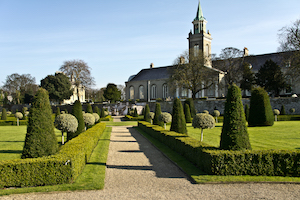
There are a number of worthwhile art galleries in Dublin, most notable among which are the National Gallery of Ireland and the Irish Museum of Modern Art.
The National Gallery of Ireland houses more than 12,000 pieces of art, from paintings to prints and sculptures. It features work from Jack B. Yeats, Van Gogh, Monet and Caravaggio.
Meanwhile, the Irish Museum of Modern Art is Ireland's leading institution collecting modern and contemporary art. It is located in the former 17th century Royal Hospital building in Kilmainham, with its beautiful grounds containing a formal garden and medieval burial grounds.
Like many of the national museums, admission to both of these art galleries is free.
5. National Museum of Ireland
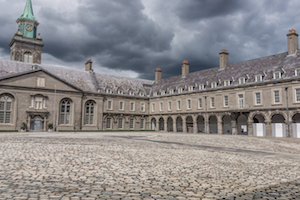
The National Museum of Ireland is split across four main campuses in Dublin and Mayo. Of these we would highly recommend the Decorative Arts and History museum in Collins Barracks. As the name might suggest, Collins Barracks was an army base for nearly 300 years before being renovated to become part of the National Museum. It is itself a historical place of interest and played a key base for the British troops in the 1916 Easter Rising. These days it showcases Ireland's economic, social, political and military progress through the ages.
Also worthwhile is the Archaeology museum campus on Kildare Street. It contains many excellent examples of Celtic and medieval art, including the Tara Brooch and Ardagh Chalice.
Again, entry to the National Museum of Ireland is free of charge.
6. Dublinia
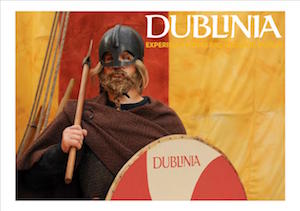
Dublinia is fast becoming one of Dublin's most popular attractions. Located at Christchurch, it has four exhibitions on offer, which include learning more about Vikings and the Battle of Clontarf, life in Medieval Dublin, how archaeology works and a 96 step climb to the top of the medieval St. Michael's Tower for spectacular views over the city. This is worth a visit, and will keep kids entertained too.
7. National Leprechaun Museum
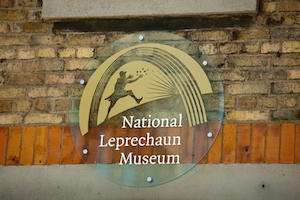
So yes, this really does exist, and no, it's not as bad as you might think! The National Leprechaun Museum dedicates itself to Irish mythology and explores the world of Irish folklore and old stories. It offers an interactive and engaging experience for kids and adults alike, and offers visitors a deeper understanding of Irish culture and imagination.
8. Little Museum of Dublin
One of the newer museums in Dublin, the Little Museum of Dublin is worth a visit. Located in a Georgian townhouse on St. Stephen's Green and focusing on the 20th century, it should take you less than an hour to wander around. It contains 400 pieces of art, photography, letters and other artefacts from the era, offering unique insight into the life and changes in Dublin throughout the 20th century.
9. Cathedrals of Christ Church and St. Patrick's
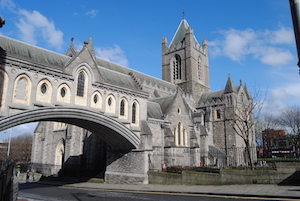
Two of the most iconic cathedrals in Dublin are located a stone's throw away from each other, namely St. Patrick's Cathedral and Christ Church Cathedral.
St. Patrick's Cathedral, named after Ireland's patron saint, is one of the last remaining medieval buildings in Dublin, built between 1220 and 1260 AD and is the largest cathedral in Ireland. A number of well known people are buried on the site, including Jonathan Swift, author of Gulliver's Travels, who was also Dean here for a while. Try and visit during one of the choir's daily performances if you can.
Christ Church Cathedral on the other hand is Dublin's oldest building, with the oldest parts dating from around 1030 AD. It contains beautiful floor tiles and a distinctive archway (over what is quite a busy road these days). However, one of its most renowned features is its 12th century crypt, one of the oldest and largest in Ireland and the UK.
10. Dublin Castle
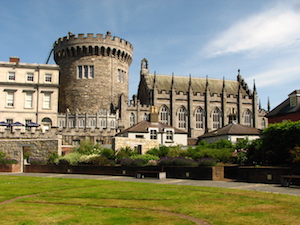
If you're after the classic castle, with moats, drawbridge, turrets or crenellations, then this is not the castle for you. While Dublin Castle dates back to the early 13th century (and is probably built over a much earlier defensive fort), much of what remains today is from the 18th century. The Record Tower is the only remaining building from the original medieval structure which has somehow miraculously survived.
If visiting the castle, be sure to take in the State Apartments, the Chester Beatty Library and the Dubhlinn Gardens, which cover the area where there was once a black pool or “dubh linn”, where is Dublin gets its name.
These days the castle is mainly used to host grand ceremonial or state functions, but is open to the public if no event is on.
Photo credits: ccharmon, Joe Loong, Rob Hurson, William Murphy, Ana Rey, Jolin 2013